Central Lineman
Experience Central Line Training at its Best, with the Most Widely Used Ultrasound CVC Training Models
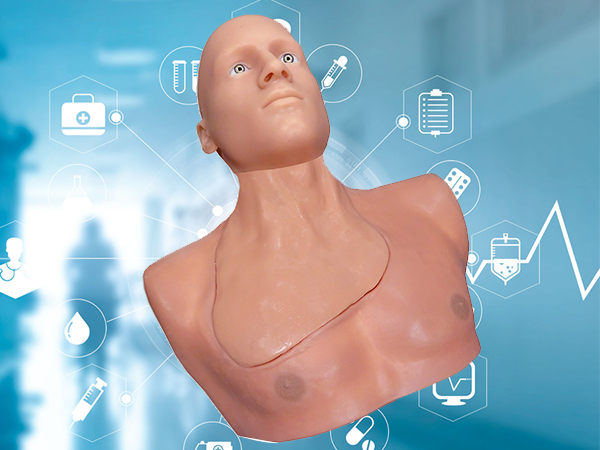
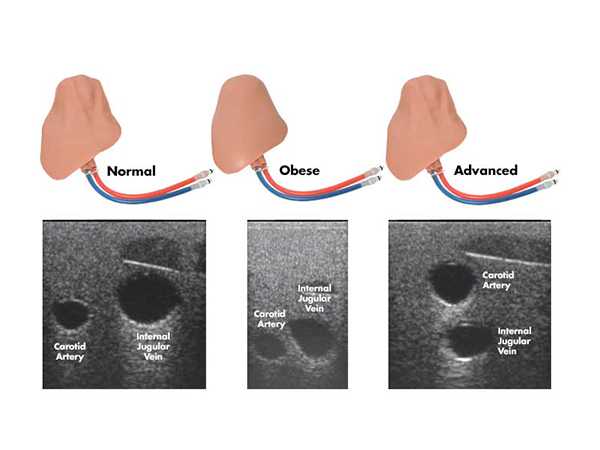
CentraLineMan® is an anatomically correct, clinically relevant Central Venous Catheterization training solution that now comes with time-tested, ultrasound compatible tissue variations so life-like you can feel the palpable differences.
CentraLineMan is the most widely used Central Venous Catheterization training solution in the market today. This flexible system offers unsurpassed value with clinically relevant anatomy, time-tested ultrasound compatible tissues, with market leading durability from needle sticks to full catheterizations; all with the ability to interchange the Articulating Head, Body Form Base, and Tissues with many of Simulab’s other procedural task trainers.
Investing in CentraLineMan and any of Simulab’s other products comes with the guarantee of receiving exceptional customer service, visibility, and support for product upgrades and the comfort of “no customer being left behind” as we keep pace with technological advancements.
Clinically Relevant Anatomy :
CentraLineMan features clinically relevant landmarks and anatomy; learners can practice performing full venous catheterization using ultrasound-guided or blind/landmark insertion approaches at the subclavian, supraclavicular, and internal jugular vein sites. CentraLineMan includes also includes accurate internal and external landmarks that are palpable and or visible under ultrasound. These include:
- Upper torso and neck.
- Trachea.
- Sternal notch.
- Sternocleidomastoid muscle.
- Sternal and clavicular heads of the sternocleidomastoid muscle.
- Manubrium.
- Lateral border of the first rib.
- Superior vena cava.
- Upper Lung.
- Vascular Anatomy including the External Jugular, Subclavian, and Brachiocephalic Veins; Carotid and Subclavian and Brachiocephalic Veins; Carotid and Subclavian artery.
Skill Development:
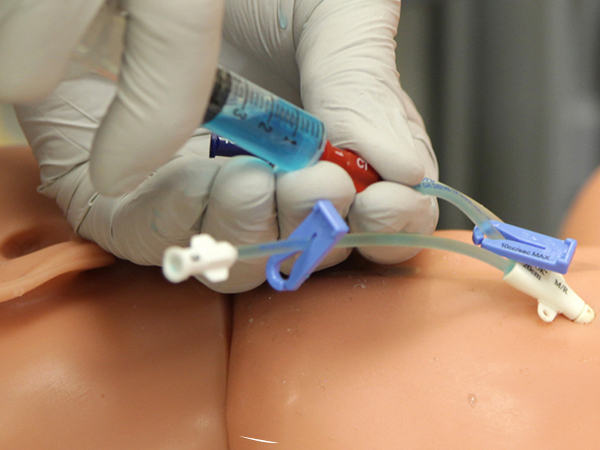
- Practice full central venous catheterization using ultrasound guided or blind/landmark insertion approaches at the subclavian, supraclavicular, and internal jugular access sites.
- Practice placing the patient in the appropriate position per access site standards.
- Gain experience in identifying and selecting appropriate access site based on patient anatomical variations.
- Practice use of ultrasound for Developing psychomotor skills required for obtaining visualization during cannulation.
- Detecting anatomical variations.
- Distinguishing vessels.
- Visualizing arterial pulse and venous compression.
- Identifying the anatomical location of the target vessel.
- Visualizing needle cannulation of the target vessel in transverse view.
- Visualize threading of guidewire in longitudinal axis view.
- Reducing the rate of mechanical complications due to anatomical variances such as pneumothorax or arterial puncture.
- Improving first cannulation success and decreasing needle passes.
- Practice palpating external landmarks to identify vessel location.
- Practice identifying unsuccessful vessel access by fluid feedback representing arterial puncture.
Components:
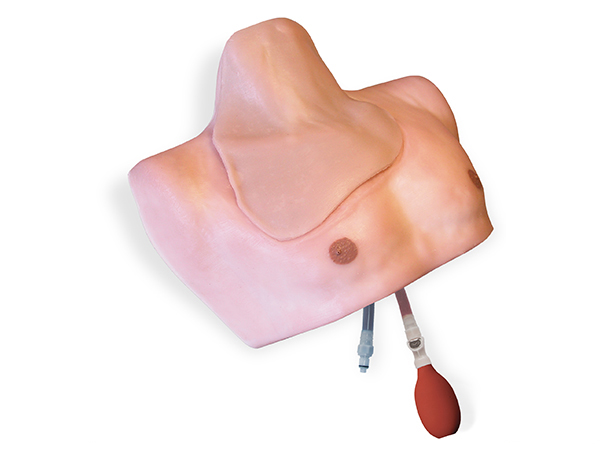
- CentraLineMan Torso.
- Replaceable Tissue (CLMT-50).
- Vessel Filling Port.
- Fill Line.
- Pulse – Hand Pump.
- Venous Pressure Regulator.
- Carrying Case.
- Arterial Fluid (red).
- Venous Fluid (blue).
- User’s Guide.
Dimensions:
- Size: 18″ h; 27″ w; 8.5″ d (carrying case).
- Weight: 27 lbs.

 471, Road No. 87, Paramount Hills, Jubilee Hills, Hyderabad, Telangana 500096